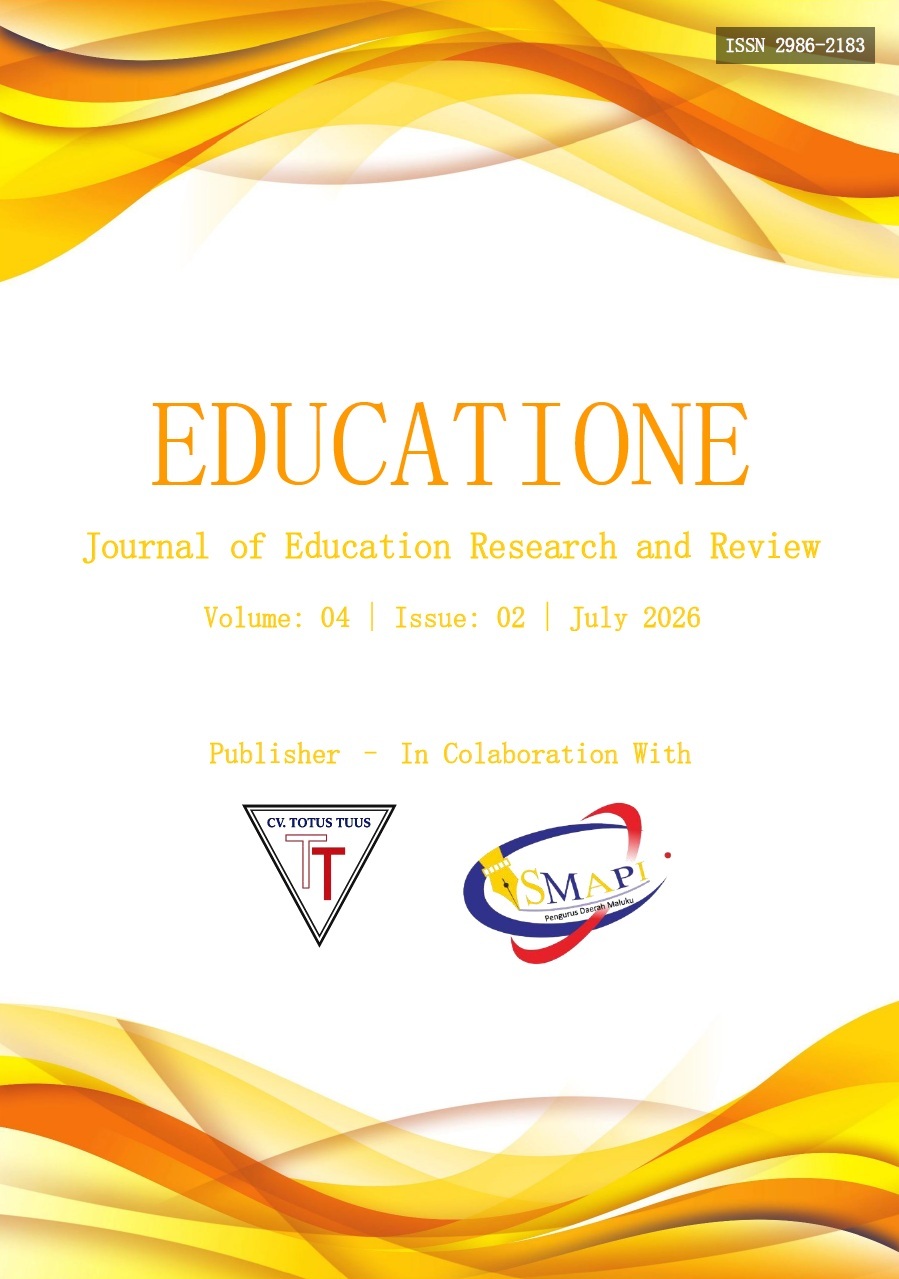
THE RELATIONSHIP BETWEEN SELF-ESTEEM AND FEAR OF MISSING OUT AMONG PARENTS WHO USE FACEBOOK
DOI:
https://doi.org/10.59397/edu.v4i2.123Keywords:
Facebook, Fear of Missing Out, Parents, Self-Esteem, Social MediaAbstract
Fear of missing out (FoMO) has become an increasingly relevant psychological phenomenon in the digital era, including among parents who actively use Facebook. Self-esteem may be associated with FoMO because individuals with lower self-evaluation tend to seek external validation and remain continuously connected to social information. This study aimed to examine the relationship between self-esteem and FoMO among parents who use Facebook in Salatiga City. A quantitative correlational design was employed. Participants were 335 parents aged 18-60 years who had at least one child, actively used Facebook, and lived in Salatiga City. Participants were selected using purposive sampling based on predetermined inclusion criteria. Data were collected using an adapted Coopersmith Self-Esteem Inventory (CSEI) and the Fear of Missing Out Scale (FoMOS). The instruments met the item-validity criterion and demonstrated acceptable reliability. Because the data were not normally distributed, the hypothesis was tested using Spearman's rank correlation. The results showed a significant negative association between self-esteem and FoMO (rho = -0.156, p = 0.004). This finding indicates that higher self-esteem is associated with lower FoMO; however, the relationship is very weak. Therefore, self-esteem should not be interpreted as the only psychological factor related to FoMO. Other factors, such as Facebook-use intensity, social comparison, loneliness, social anxiety, and digital self-validation, may also contribute to FoMO among parents. These findings provide an empirical basis for digital well-being programs that combine self-esteem strengthening with digital literacy and self-regulation strategies.
Downloads
Published
How to Cite
Issue
Section
Citation Check
License
Copyright (c) 2026 EDUCATIONE

This work is licensed under a Creative Commons Attribution 4.0 International License.