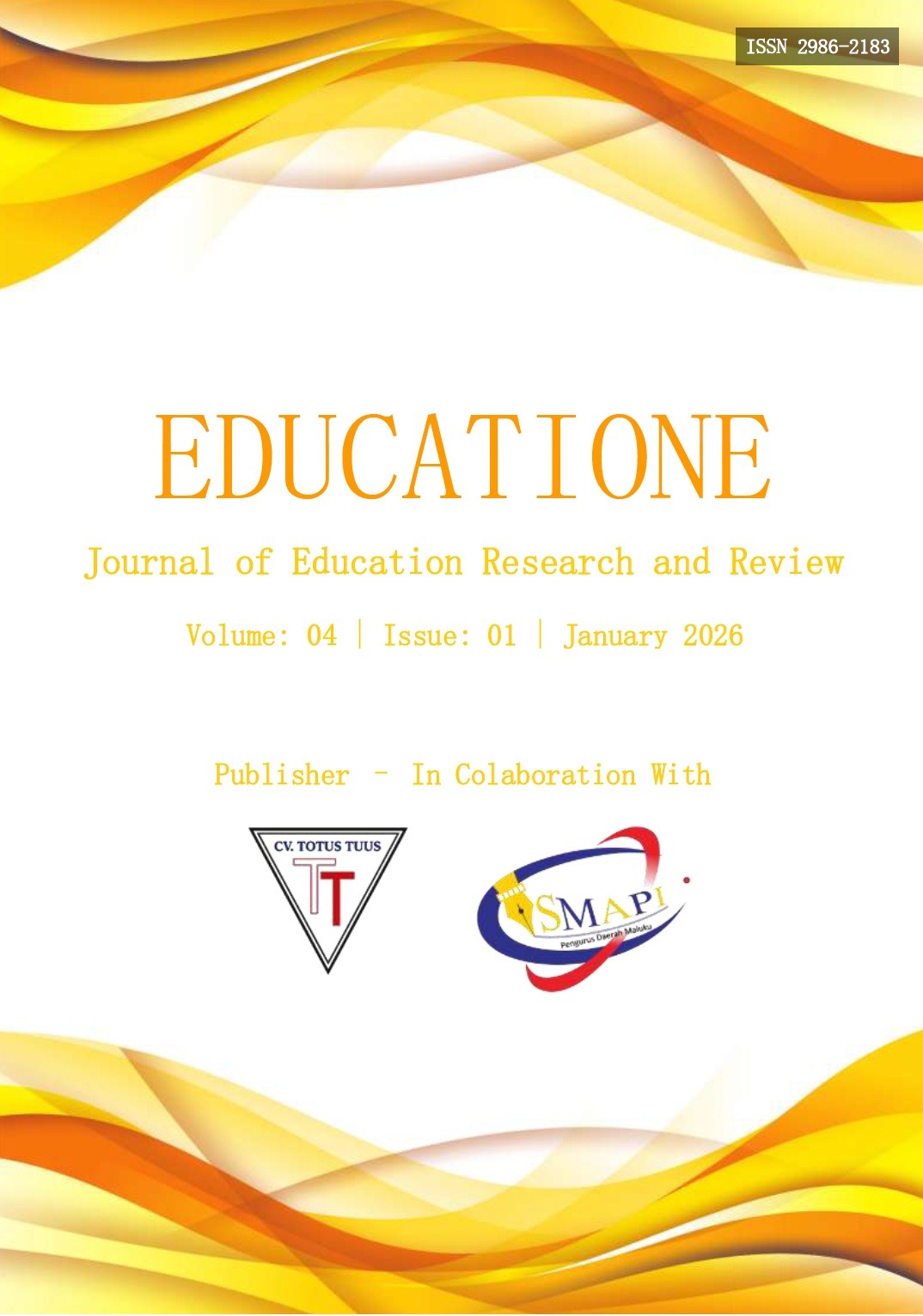
BIG BOOK MEDIA AS A LITERACY INTERVENTION IN PRIMARY CLASSROOMS: IMPROVING READING OUTCOMES
DOI:
https://doi.org/10.59397/edu.v4i1.193Keywords:
Big Book, Classroom Action Research, Primary Education, Reading Literacy, Shared ReadingAbstract
Reading literacy in primary school is foundational, yet classroom observations indicated that many Grade 3 students demonstrated limited participation in shared reading, weak oral reading fluency, and insufficient comprehension of narrative texts. This study aimed to improve students’ reading literacy through the use of Big Book media in classroom instruction. A Classroom Action Research design following Kemmis and McTaggart was implemented in two cycles (planning, action, observation, and reflection) with 28 third-grade students. Data were collected through student-activity observations and reading literacy tests administered as pre-test and post-test in each cycle, with a minimum mastery criterion of 70. The findings show consistent improvement in reading performance and mastery. The class mean increased from 64.25 at baseline to 73.10 in Cycle I and 82.75 in Cycle II, while mastery rose from 35.71% to 64.29% and reached 89.29% by Cycle II. Observational data also indicated higher engagement, increased confidence in reading aloud, and more active participation during discussion and question–answer sessions. The study concludes that Big Book–assisted shared reading is effective for strengthening Grade 3 students’ reading literacy, both cognitively (fluency and comprehension) and affectively (motivation and participation). Practically, teachers may integrate Big Books into routine literacy instruction to support interactive reading. Future research should test the approach with larger samples, comparison groups, and longer follow-up across varied text genres.
Downloads
Published
How to Cite
Issue
Section
Citation Check
License
Copyright (c) 2025 EDUCATIONE

This work is licensed under a Creative Commons Attribution 4.0 International License.